Gundersen Health System l UX Research, UX Design

Addressing a Massive Mental Health Crisis

Role                                                       Team                                                        Category                                                                    Timeline
UX Designer, UX Researcher           3 UX Designers, Client Team             Research, Storyboards, Web Wireframes            April-August 2022

Context

Gundersen Edge, an innovation generator within Gundersen Health Systems, was seeking to build a new venture to solve mental and physical wellness challenges. As the UX team, we were set out with the task of finding a pain and creating a concept to pitch to the Sponsor board.

Challenge

We were set out to answer the question, “How might we empower Suicide, PTSD, Anxiety, Chronic Pain, Depression (SPACD) patients to address their mental and physical suffering, in a way that leverages current (and future) neuroanatomical (NAT) and cognitive behavioral therapies (CBT) to deliver measurable results in a safe, comfortable and professional setting so that we develop a trusted, successful, and scalable patient model?”

Methodology

Research

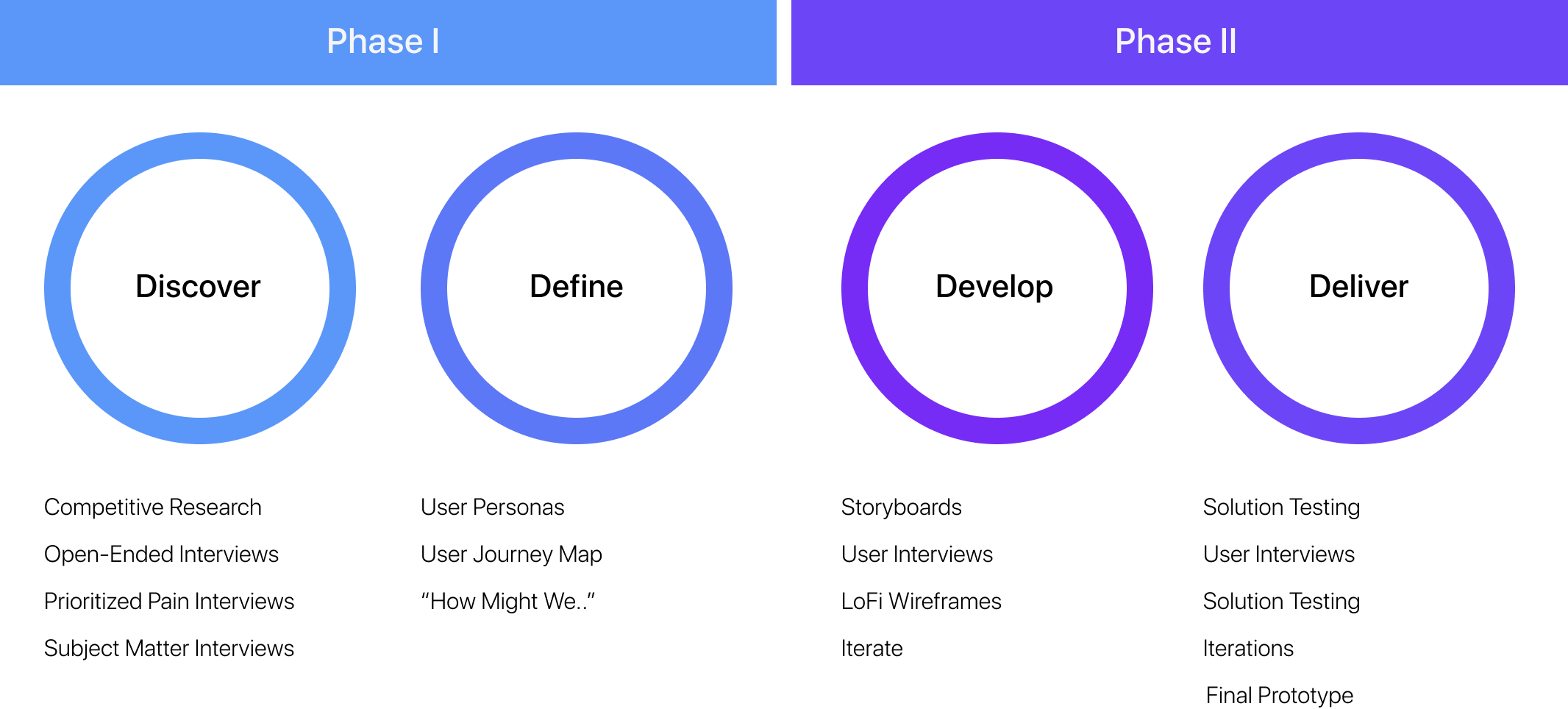
Although we had set a "How Might We" question in our initial Challenge Framing session, we had little specificity on what the real pain of patients were. Therefore, it was important for us to deep dive into the day-to-day lives of our target persona, discovering what they value and what was missing from their current lives. We spoke to a range of SPACD patients, conducted open-ended interviews, prioritized pain point interviews, and interviews with medical providers. With these research findings in mind, we defined user personas, user flows, and journey maps.

Learning From
Our Users

What did we
discover?
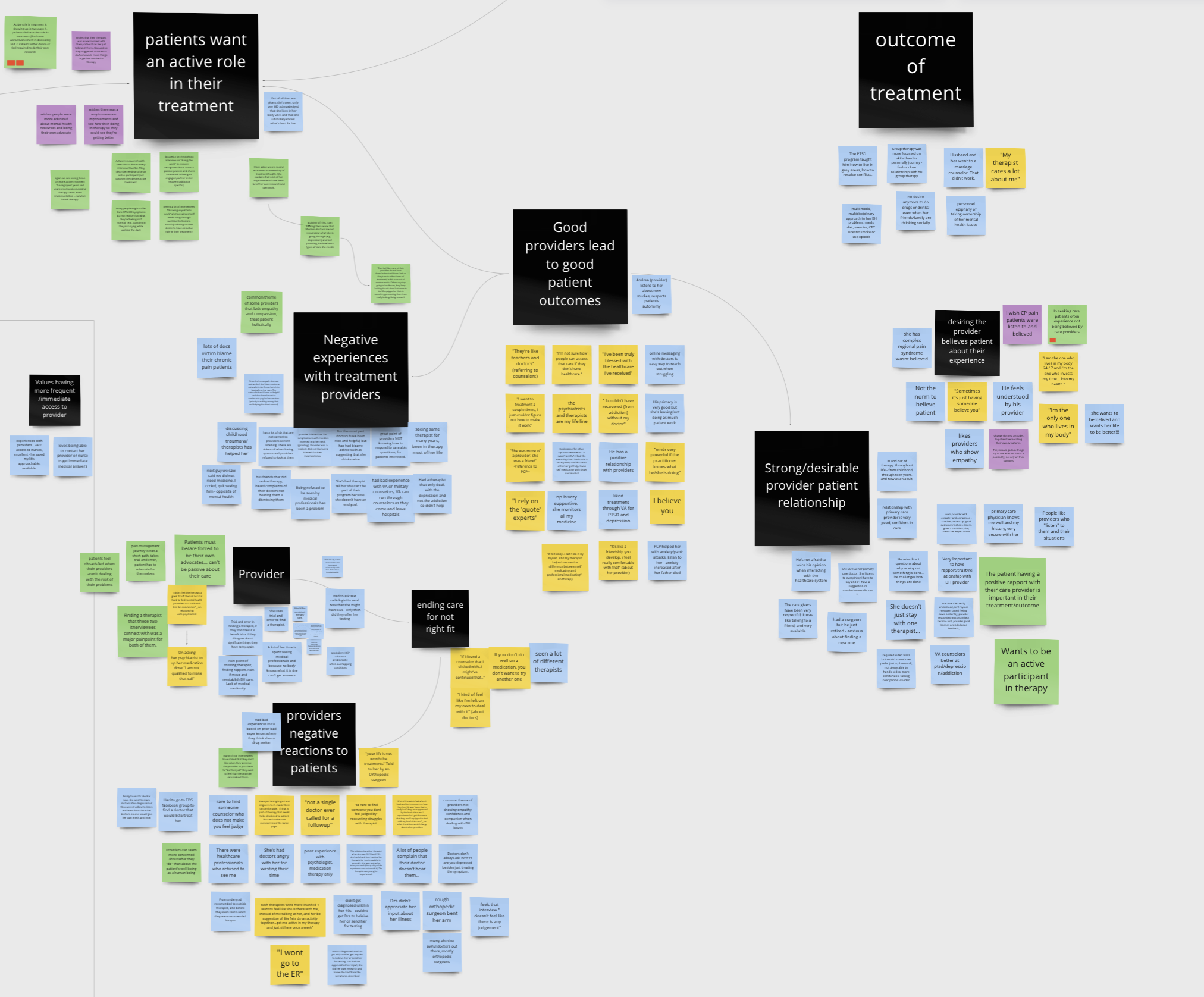
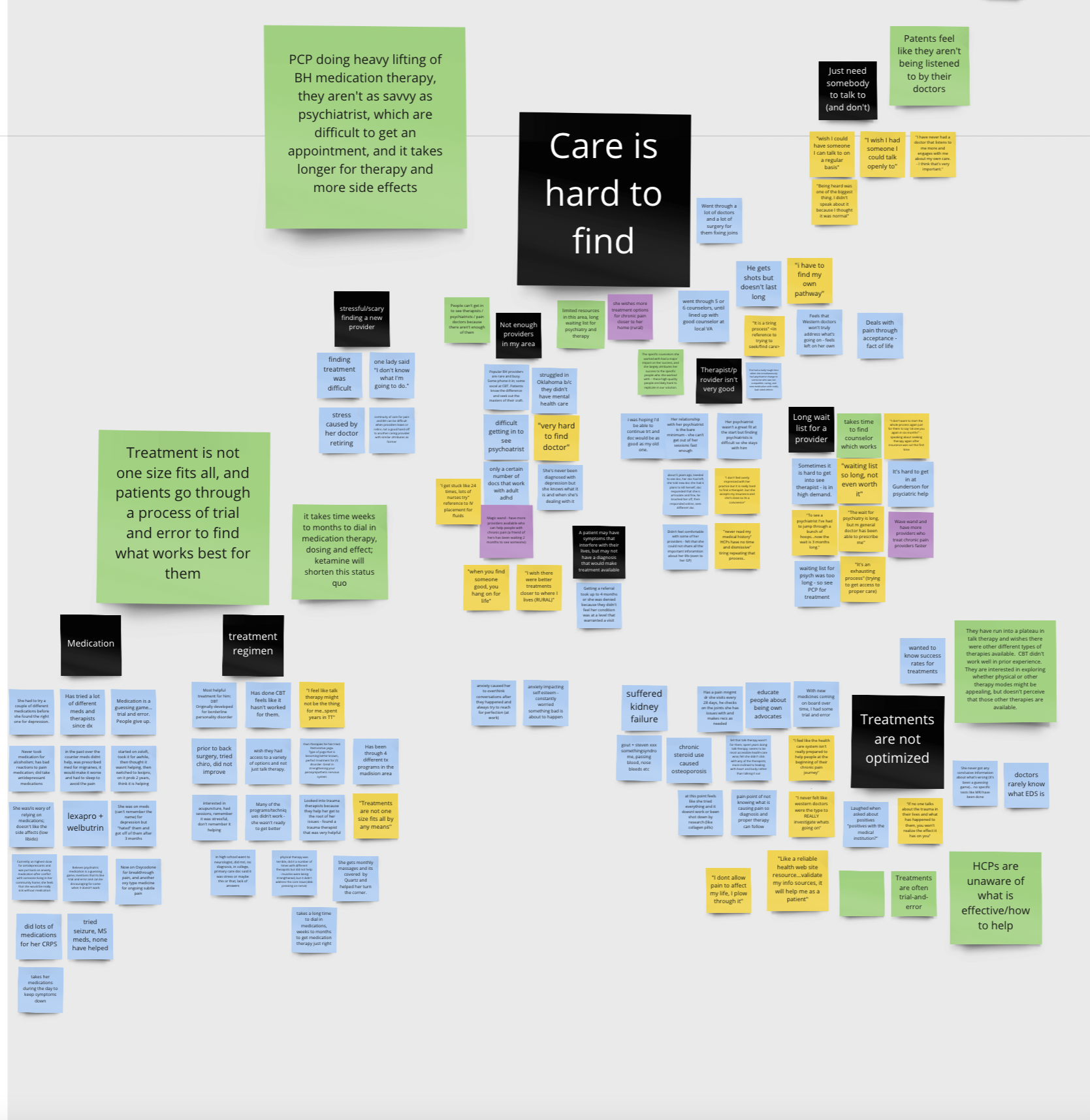
Through Open-Ended Discovery Interviews, we validated that SPACD patients are experiencing a multitude of challenges as they traverse the journey of finding effective treatment. Interviews revealed that many participants experience challenges in their relationship with their providers and desire a more holistic solution. Many patients experience multiple SPACD conditions at once, but often receive disconnected treatments that only address one condition. This is a result of treatment providers not listening to their patients with an open mind to understand the "bigger picture." Patients may not always have the most informed evaluation on the effectiveness of their treatment, but they value that treatment through the level of compassion felt from the providers. If they feel their needs aren't met, patients are motivated to do their own research. Changing providers and insurance was also a considerable pain for patients because it is challenging to rebuild trust.While some patients have found treatments that made their symptoms manageable, many patients still continue too live with these challenges that interrupt their daily lives.
Many of the pains we heard in our Open-Ended interviews were confirmed and expanded upon during our Prioritized Pain Point interviews. Participants revealed that the four strongest pains heard out of ten pains were wanting a holistic treatment regimen to improve their overall wellness, feeling like providers don't truly listen or understand them, feeling anxious if they're not receiving continuous and uninterrupted care, and facing a difficult process of trial and error when seeking treatment.Participants also added new pains to the list including wanting better access to medications that work, disliking the side effects of their medication but having no other option, and feeling anxiety and frustration with ongoing administrative paperwork around treatment.
The 45 interviews with providers and subject matter experts revealed that there is a lack of providers to treat patients more holistically. Providers face limited resources in their specialties, which leads to less quality in care when treating patients and decreased incentives to referring patients out. Additionally, providers have their own challenges and can't always help in the way they'd like to. All providers stated that treating individual patients always brings unique challenges. Some behavioral health providers observe that medication alone can just be a bandaid for symptoms, but not heal the root cause. Medical providers are generally more willing to prescribe medication. Still, providers have to be cautious when prescribing medications due to factors such as the opioid crisis and stigmas around meds. Some providers are open to incorporating or referring patients to new alternative medications, while others remain skeptical.
Synthesizing
Findings

After learning more about our users through open-ended interviews, prioritized pain point interviews, and subject matter interviews we began to synthesize our findings. We created a Miro board and after every 8-10 interviews, we worked together to synthesize our findings, group similar findings, and develop insights.
User Personas
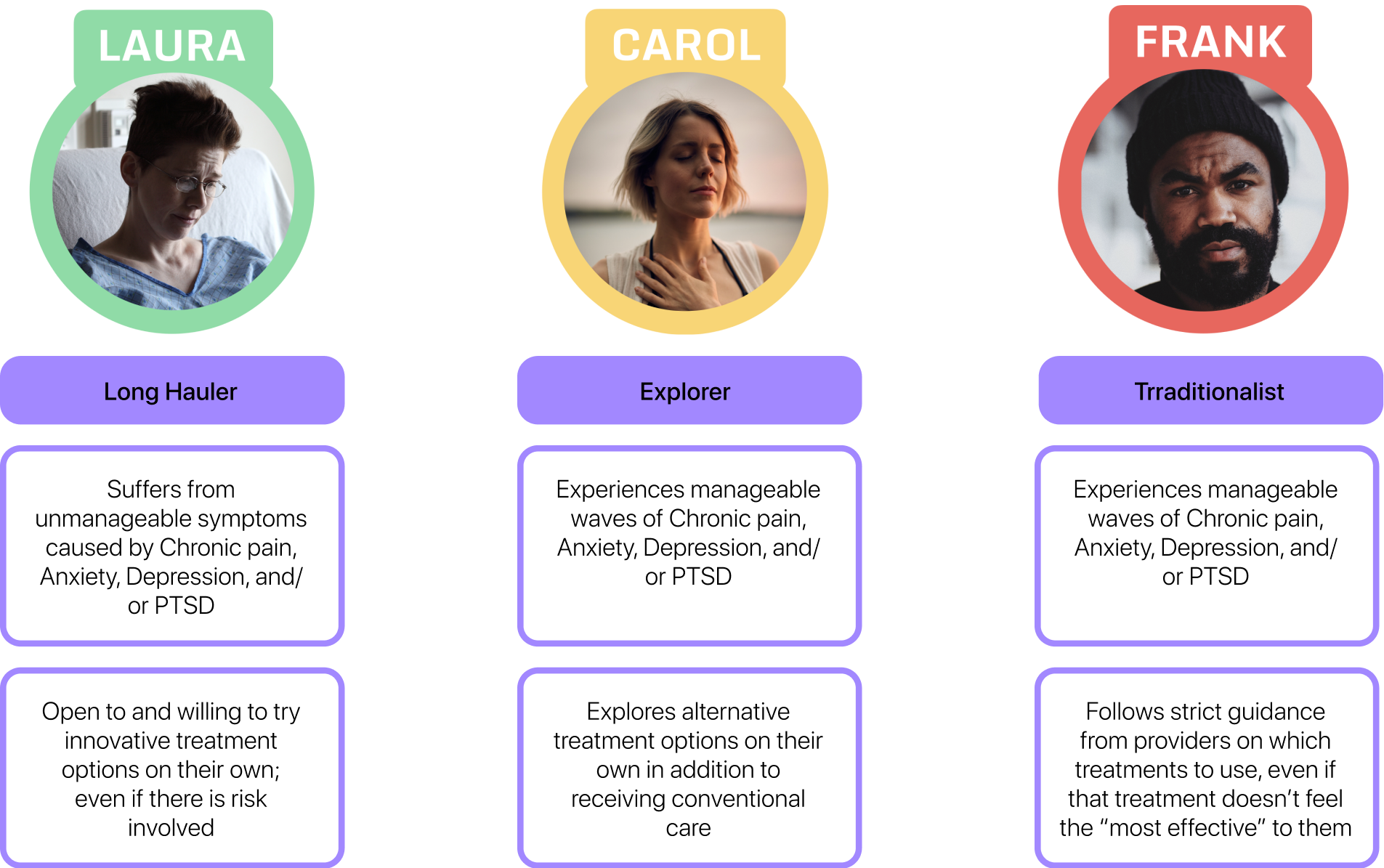
From our research findings, we crafted three user personas: a long hauler, explorer, and traditionalist.

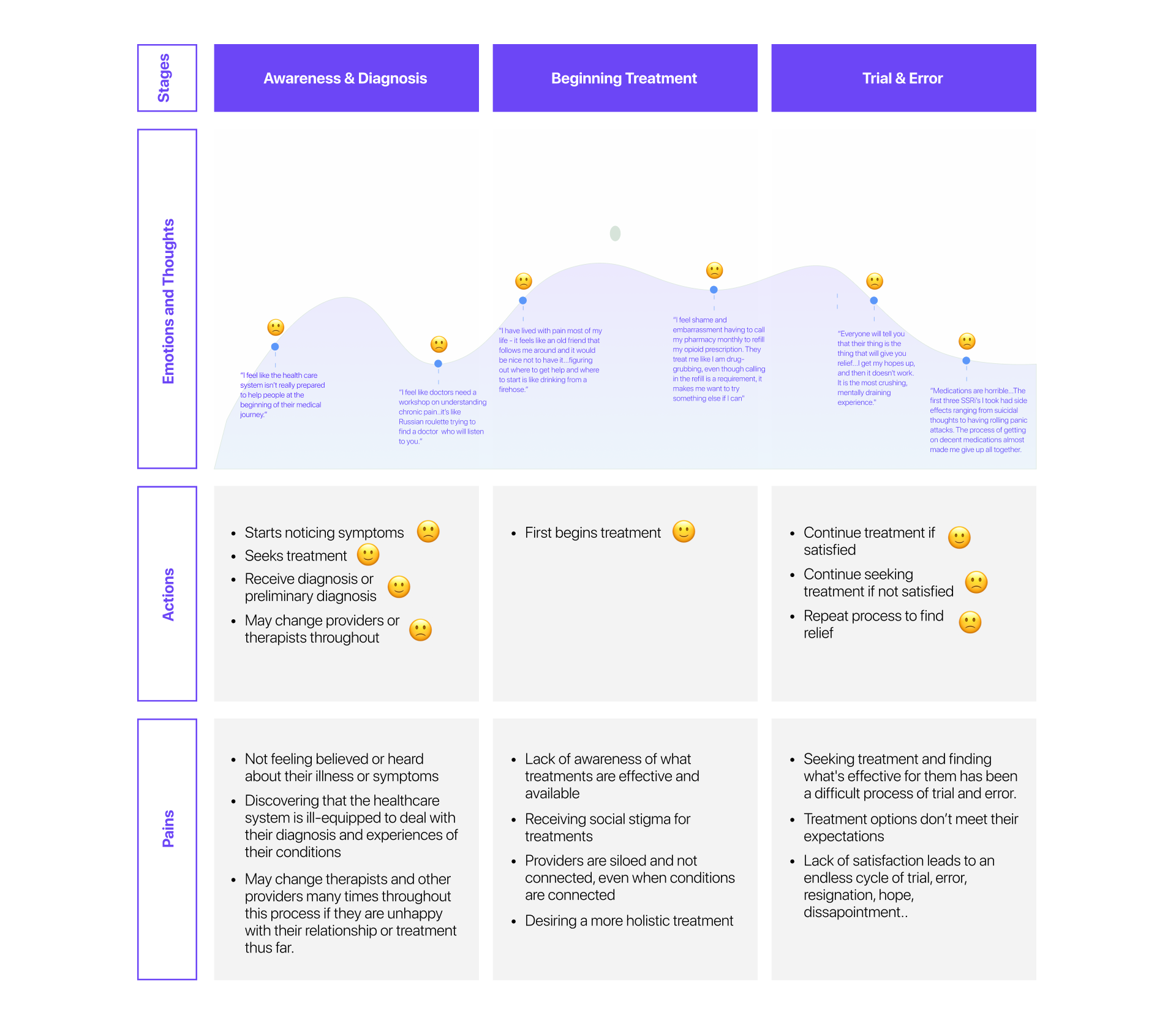
User Journey
Map

Storyboards

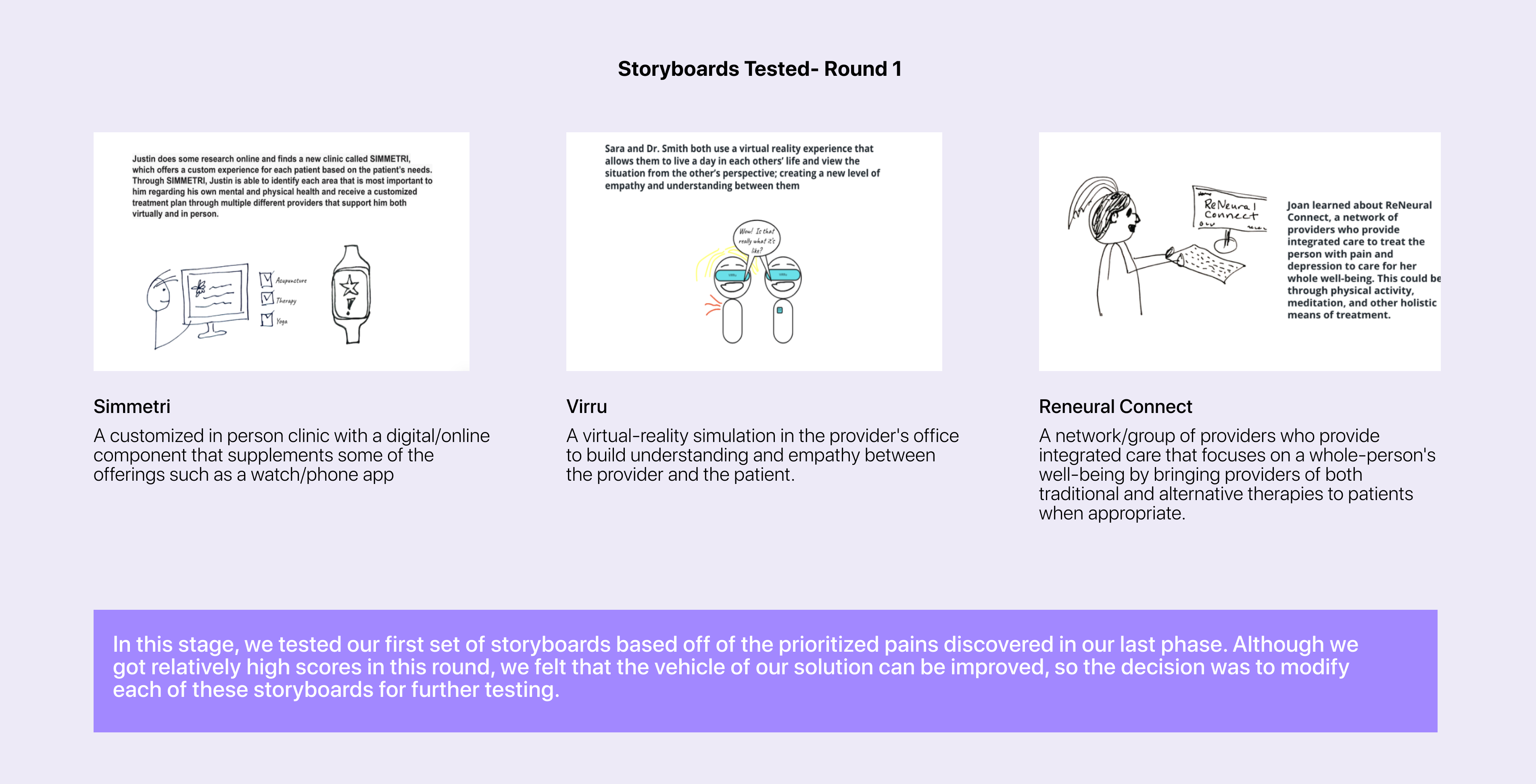
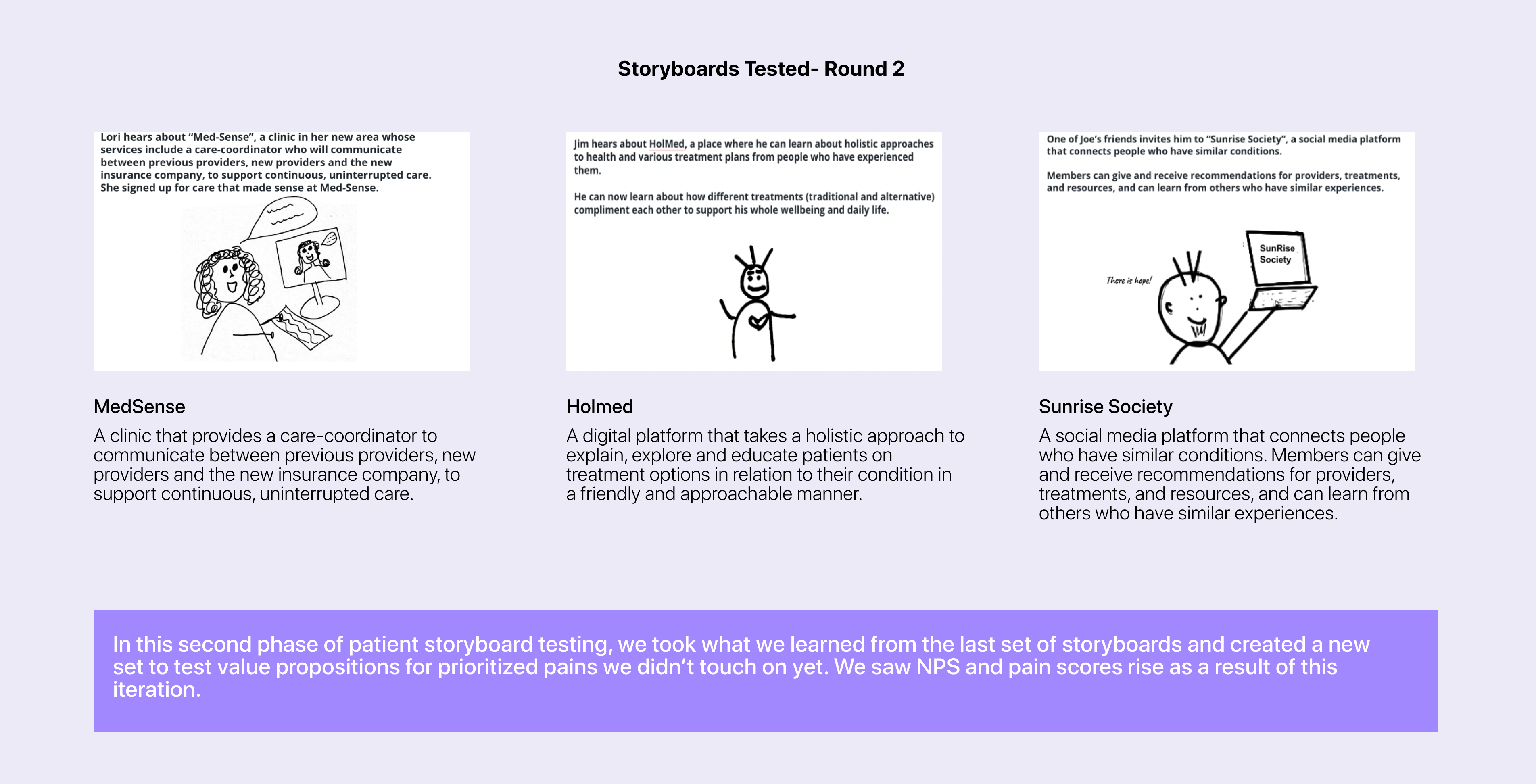
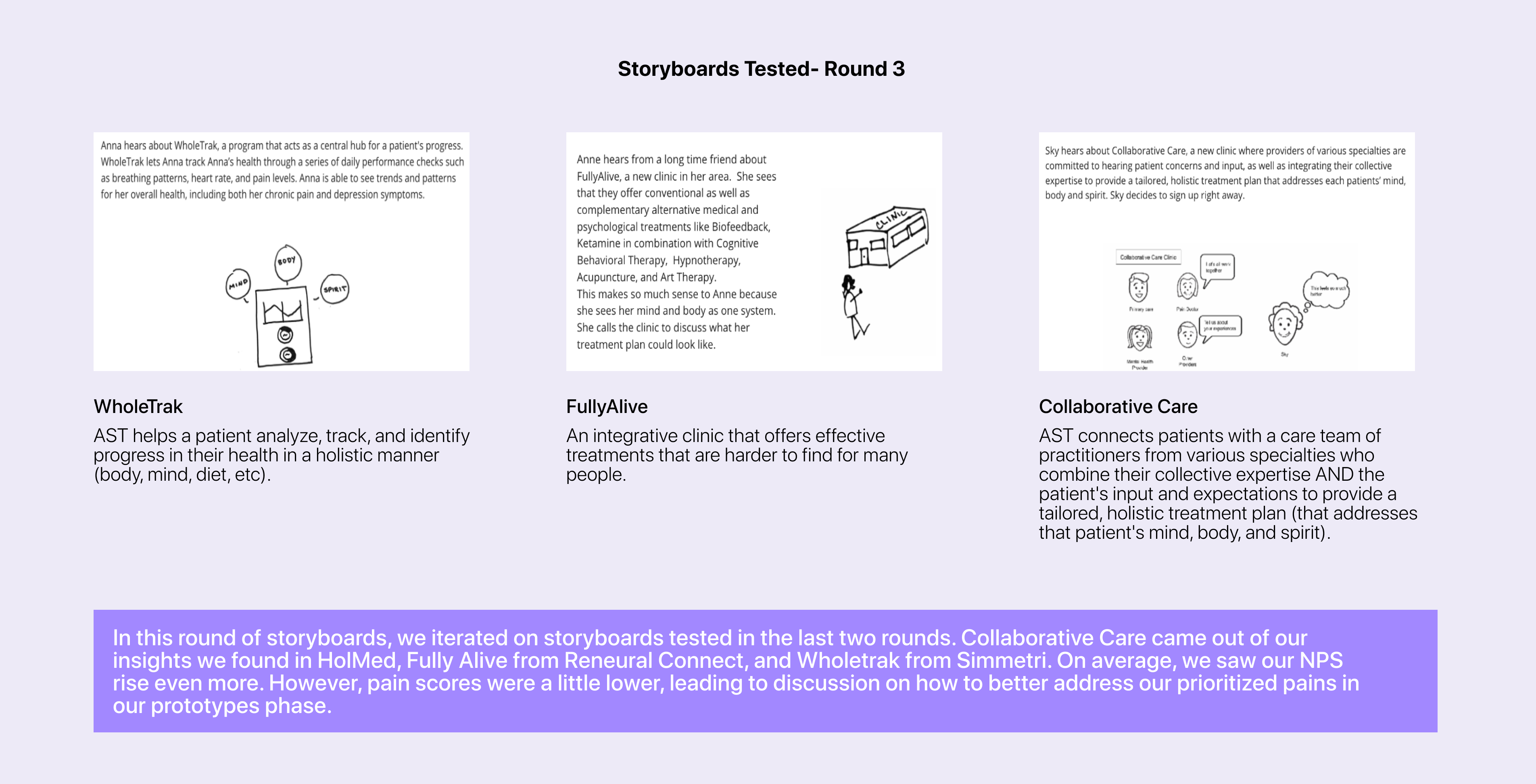
We tested over 20 storyboards with patients and providers. We learned that patients liked the concept of all of their providers working together in unison to treat their condition holistically. We also learned that patients deal with a lot of challenges in transferring insurance and/or medical records and filing redundant administrative work.

We learned that providers are inherently skeptical, especially when it comes to working with other providers or third parties. This generates more work to their already busy schedule. In addition, there are gaps in their knowledge to address areas such as holistic health.

Low-Fidelity Prototype

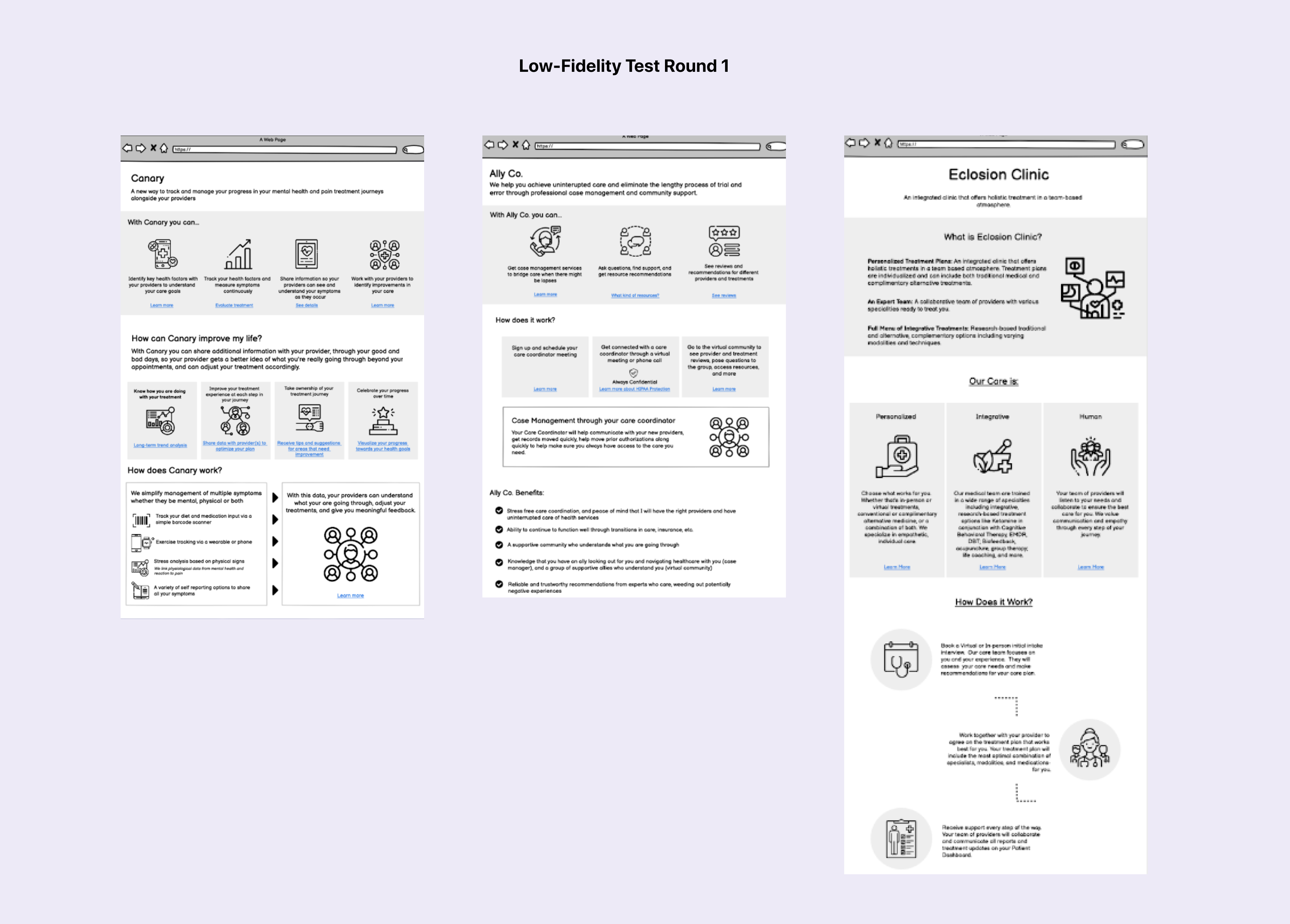
We tested over prototypes and learned that patients could benefit from healthcare support in many different ways beyond treatment itself. Patients and providers revealed that an integrative clinic offering complementary medicine and collaborative care would be desirable.
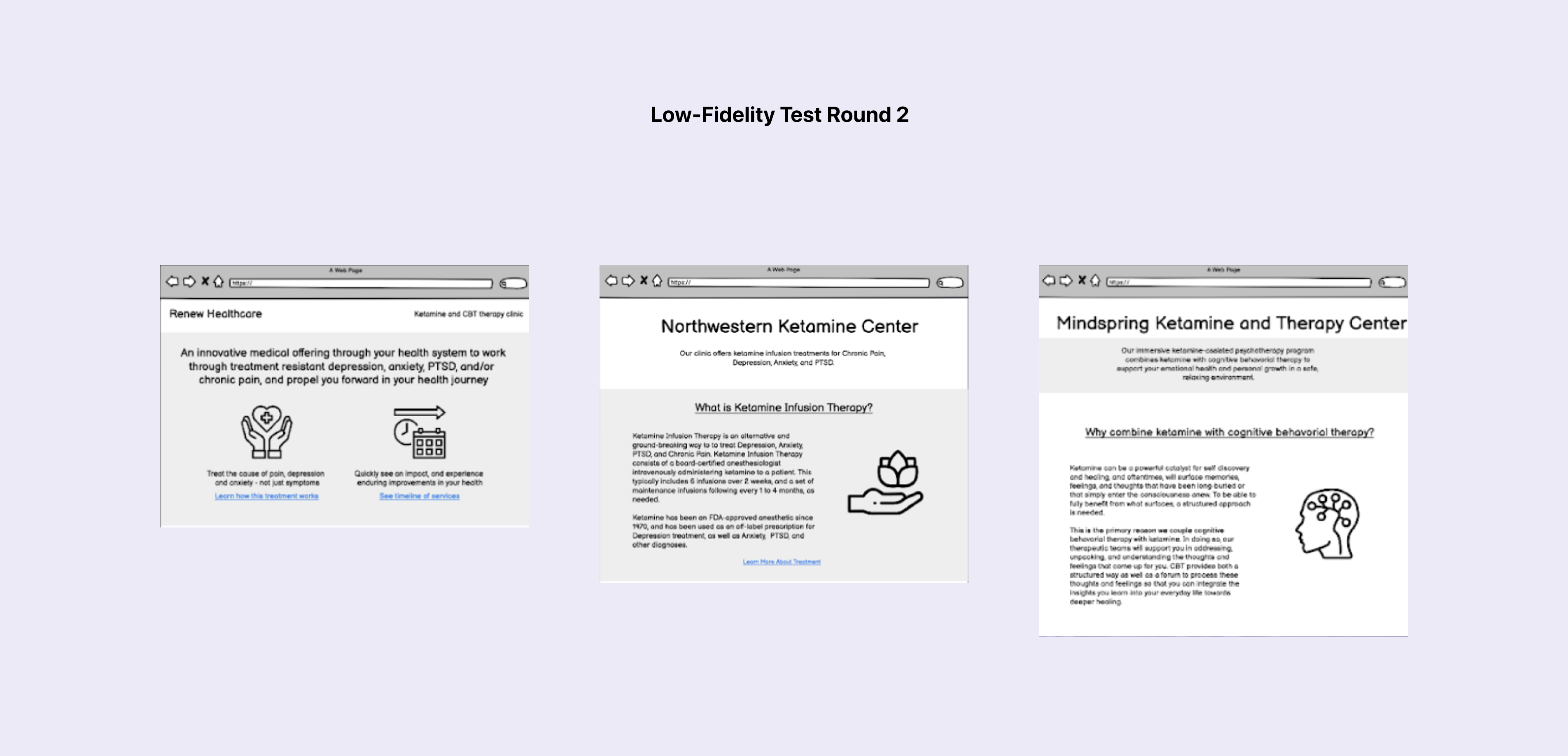
Specifically, we learned that patients would be interested in a Ketamine and CBT treatment. Both high and low intensity patients reported feeling safer and more open to a ketamine and CBT treatment offered through a health care system. Providers described this treatment as being "cutting-edge" and potential alleviation for their patients, especially those with treatment-resistant conditions.
From this test we deemed that Canary may have desirability if we continued to test with this or a different population and our recommendation is to possibility resubmit Canary to Ideation (as it fell too far out of our challenge frame for this incubation).The insights garnered from the Eclosion clinic solution indicated that an integrative clinic that offered complementary medicine and collaborative care would be desirable to both patients and providers. We believed this may need more direct feature testing.Our insights lead us to believe that AllyCo needed further investigation as we hypothesized that the combination of virtual community and care liaison features may be muddying the results and we needed to test them separately.
From testing Ketamine and CBT, we learned that patients and providers found more credibility in the combination of both together. From our Ketamine offered in a Health Care model, insights garnered that patients and providers saw some strong positives including immediate trust, a sense of expertise and reassurance of safety, better communication with providers, and the perception that it can be covered by insurance. Our Ketamine in a standalone clinic indicated that some patients did not express negative perceptions and explained that “if my doctor recommended it, I’d go to either.” However we also heard  SPACD patients, Ketamine patients, and Providers express  perceptions of standalone ketamine clinics as sketchy. Our insights led us to move forward with a major-healthcare branded prototype as it showed higher patient and provider desirability and higher credibility. It also differentiates us from most other clinics and is a good fit for working with Gundersen.

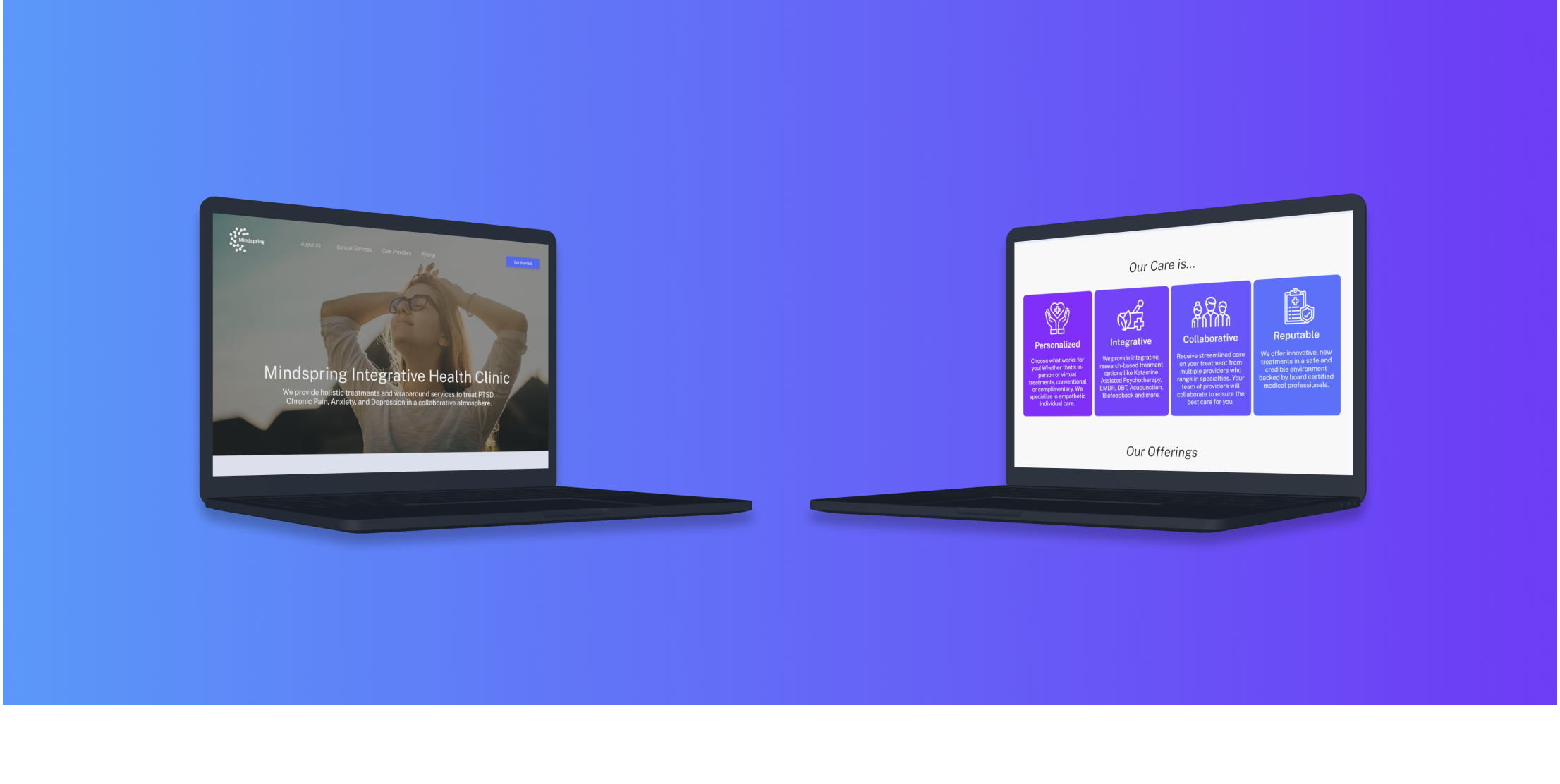
Introducing Mindspring

Insights from testing Mindspring Health Clinic led us to believe that there is an unmet need for SPACD Patients that can be alleviated by Ketamine and CBT treatment. Although we initially narrowed our segment to high-intensity patients, we found that less-intense patients still had interest and remained open to the idea if they had options that they perceived to be less intensive.
View Prototype